

Estimated reading time: 15 minutes
Key Takeaways
- Minnesota carry permit holders are more law-abiding yet must navigate complex state laws.
- The law presumes permits shall issue upon proper application.
- Minnesota laws restrict carry in certain public places with penalties for violations.
- Carrying in public under the influence or 0.04 or more alcohol is illegal.
- Understanding carry permit laws helps protect civil rights and reduce legal risks.
People with a Minnesota Carry Permit are more law-abiding compared to the general population, according to the State of Minnesota. Even so, Minnesota carry laws infringe upon our rights more than other states do. What laws should Minnesota Carry Permit holders to be aware of? And how do you qualify for a Minnesota carry permit? Do you need a carry attorney ready to help?
Minnesota Carry Attorney Thomas Gallagher believes in individual Liberty, including our natural right to own, possess and use firearms. Some of his criminal defense cases involve a firearm or other weapon in some way or another. And in many of his cases, a person’s civil rights to firearms hang in the balance, along with other criminal penalties.
The legal basis for our individual civil rights to firearms has a solid foundation. Natural law, and the Bill of Rights of the United States Constitution – the supreme law of the land – recognize this right. The courts will strike down as void, any law they find in conflict with the Second Amendment.
But government power has limits. And the the Constitution explicitly limits the power of government, not the rights of the People. “The right of the people to keep and bear Arms, shall not be infringed.”
Minnesota Statutes § 624.714 addresses when we need a pistol carry permit, and when we don’t. So it lays out how to get one, limitations on rights of permit holders, and criminal penalties for violations.
And it includes limitations on legal rights based upon criminal convictions and offender registration status.
Carry Permit Holders pass a criminal background check and a safety training course in order to get their carry permit. And this training includes some education about applicable laws. But more education about the laws is always better. So let’s briefly discuss relevant Minnesota statutes, here.
Minnesota Carry Permit Law: If a person in Minnesota can lawfully possess a firearm, she doesn’t always need a permit to carry. But for those situations and places where the law does require a permit, Minnesota has a “shall issue” carry permit law.
Constitutional Carry, to 1975 Discretionary, to 2003 Shall Issue
The Personal Protection Act of 2003, changed Minnesota to a “shall issue” state. So even though law enforcement still has some discretion to deny, the law limits that discretion.
Before 1975, Minnesota Statutes did not infringe upon our right to carry a firearm in public places. But in 1975, for the first time the Minnesota legislature adopted a law infringing upon the right to carry in public, Minnesota Statutes § 624.714 (1975):
“Subd. 1. A person … who carries, holds or possesses a pistol in a motor vehicle … or on or about his clothes or person, or otherwise in his possession or control in a public place or public area without first having obtained a permit to carry the pistol is guilty of a gross misdemeanor. …
Minn. Stat. § 624.714 (1975)
Subd. 2. Applications for permits to carry shall be made to the chief of police … or to the county sheriff …
Subd. 5. No permit to carry shall be granted to a person unless the applicant:
(a) Is not a person prohibited by section 624.713 from possessing a pistol; …
(c) Has an occupation or personal safety hazard requiring a permit to carry.”
And the practical effect of this, then new, law was to make criminals out of people caught carrying a firearm, when a law enforcement officer and prosecutor exercised their discretion to charge the crime. Notice that the timing of this law, coincides with the “war on drugs” federal Controlled Substances Act of 1970, and the associated exponential spike in mass incarceration – disproportionately impacting African-Americans. Related:
Removing Drugs from Minnesota “Crimes of Violence” Law: The New Jim Crow
In contrast, the current “shall issue” law, stemming from The Personal Protection Act of 2003, presumes that the Minnesota carry permit shall issue upon proper application. Minnesota Statutes § 624.714. The burden of proving that the applicant is ineligible is on the Sheriff. If the applicant appeals to District Court, the court owes no deference to the Sheriff’s decision. The court review of the application is de novo, with a legal presumption that the court shall issue the permit.
“Granting and denial of permits. (a) The sheriff must, within 30 days … :
Minn. Stat. § 624.714, Subd. 6 (2025)
(1) issue the permit to carry;
(2) deny the application for a permit to carry solely on the grounds that the applicant failed to qualify under the criteria described in subdivision 2, paragraph (b); or
(3) deny the application on the grounds that there exists a substantial likelihood that the applicant is a danger to self or the public if authorized to carry a pistol under a permit.
(b) Failure of the sheriff to notify the applicant of the denial of the application within 30 days … constitutes issuance of the permit to carry …”
Minnesota permit to carry disqualifications: If the applicant is disqualified by any of the objective criteria in the statute, Minn. Stat. § 624.714, the permit application will be denied. And, if a limited discretionary denial is based upon objective, rational basis, the application may be denied.
So under current Minnesota Statutes, a permit to carry a firearm in a public place:
- Presumptively granted upon proper application and qualification.
- “Hard disqualifiers” are objective, most often certain past criminal convictions.
- “Soft disqualifiers” are discretionary “grounds that there exists a substantial likelihood that the applicant is a danger to self or the public if authorized to carry.”
- Minnesota Sheriff makes the initial decision but the applicant can get de novo review of a denial by a judge.
Permit to carry in “public place”
Place restrictions: Even with a carry permit, Minnesota laws restrict the right to carry “in a public place” in some circumstances, with notice:
- Trespass model: signs giving notice. Minn. Stat. § 624.714, Subd. 17.
- Employers may restrict employees from possessing firearms (except parking). But only while working. Minn. Stat. § 624.714, Subd. 18.
- Prohibits landlords from restricting renters, guests. Minn. Stat. § 624.714, Subd. 17 (f).
Statutory place restrictions: Some places are presumptively off-limits by statute (no other notice required), even with a Minnesota carry permit:
- School property – possession crime. Minn. Stat. § 609.66, Subd. 1d.
- Exceptions, including picking up your kid or employee parking. Minn. Stat. § 609.66, Subd. 1d.
- Courthouses, Capitol area – exceptions. Minn. Stat. § 609.66, Subd. 1g.
- Most locked state facilities, state correctional facility or state hospital – exceptions. Minn. Stat. § 243.55.
- Federal buildings and security areas. 18 U.S. Code § 930.
But many in many places in Minnesota, for example in your home, no public carry permit is required. For more on these locations, see this:
Firearm Carry Without a Permit
“Public Places” in Minnesota Gun Laws
FAQ: “Can I pick up my kid at school? I have a Carry Permit”
The Minnesota general rule is that possession of a firearm on school property is a crime. But the statute provides for exceptions, including those relating to picking up your kid at school or in employee parking in the parking lot, and safety and marksman courses:
“(3) persons authorized to carry a pistol under section 624.714 while in a motor vehicle or outside of a motor vehicle to directly place a firearm in, or retrieve it from, the trunk or rear area of the vehicle;
(4) persons who keep or store in a motor vehicle pistols in accordance with section 624.714 or 624.715 or other firearms in accordance with section 97B.045;
(5) firearm safety or marksmanship courses or activities conducted on school property; …”
Minn. Stat. § 609.66, subd. 1d (f) (2025)
Criminal law: charge enhancement, minimum sentences
Having a carry permit does not change most other potential, underlying criminal charges. But possession or use of a weapon, at the time of another crime, can trigger both charge enhancements and mandatory minimum sentencing laws. So your carry attorney should be an experienced criminal defense lawyer, aware of:
- Proximity enhancements to charge severity – school, park “zone”
- Mandatory minimum sentencing law Minn. Stat. § 609.11 – exceptions – possess in connection with another crime, e.g. contraband drugs
- Prohibited person in possession – status offense (no victim) – Minnesota & federal
Age
In firearm laws, the two most important ages are 18 and 21.
- Carry permit: *eighteen & older. Courts have held the age 21 limit in Minn. Stat. § 624.714, subd. 2 (b)(2) to be void as unconstitutional. (“is at least 21 years old and a citizen or a permanent resident of the United States.”) *See note below.
- Possession: eighteen & older, exceptions for under 18. Minn. Stat. § 624.713, subds. 1(1), 2(c).
Note: The minimum legal age to carry a firearm with a carry permit in Minnesota changed from 21 to 18 on April 21, 2025, when the U.S. Supreme Court declined to hear an appeal, of a lower court ruling declaring the infringement unconstitutional. The United States Eighth Circuit Court of Appeals, in Worth v. Jacobson, 108 F. 4th 677 (U.S. 8th Cir. 2024), struck down Minnesota’s carry permit ban for the people age 18 through 20 years old, as unconstitutional. For the more on this case and Minnesota carry permit for 18-20 year olds, see the Minnesota Gun Owner’s Caucus page on: Worth v. Jacobson.
How to get a Minnesota carry permit
Applying for a Minnesota carry permit is easy.
- Application to Sheriff with proof of training class & filing fee.
- 18 years of age or older.
- Not prohibited from possessing a firearm, under Minn. Stat. § 624.714.
- Not listed in criminal gang investigation system. See, Minn. Stat. § 299C.091.
- Resident of county where requesting. Non-residents of Minnesota apply to any county sheriff.
- Renewal.
How to appeal if denied: process
- Petition District Court for Writ of Mandamus, requiring Sheriff to issue permit.
- “Must issue,” unless:
- Fails objective, criteria (not discretionary), or
- Substantial likelihood that applicant is danger to self or public if granted carry permit (some discretion).
Note: Most carry permit denials are based on the applicant being a prohibited person due to a disqualifying past criminal conviction. Several pages on this site address how to determine if your past conviction makes you a prohibited person and if so, how to attempt restoration of civil rights:
Minnesota “Crimes of Violence” & Civil Rights
Civil Rights & Guns: Minnesota Expungement Broken
Restoring Gun Rights
Restraining Order: Civil & Criminal
Felony doesn’t always impair gun rights
Gun Rights After Domestic Misdemeanor
Due process
- Denial by Sheriff with factual basis & source.
- Opportunity to submit additional documentation for reconsideration by Sheriff.
- Petition for Review by District Court.
- Within 60 days of filing.
- De Novo “fresh look” hearing by judge (no jury) – no deference to Sheriff. New evidence, new record, not limited to review of what Sheriff had.
- Burden of proof on Sheriff – clear and convincing, that:
- Disqualified, or
- Substantial likelihood – danger to self or the public, if carry permit. Claims of criminal misconduct not basis for denial if no documentation.
- Court must award prevailing applicant costs & expenses including attorney fees.
Carrying & police contacts
What about police contacts, while carrying a firearm as a valid Minnesota carry permit holder? We should be aware of minimum legal requirements. And we should also consider best practices (beyond legal requirements).
Requirements under Minnesota Statutes § 624.714, Subd. 1b:
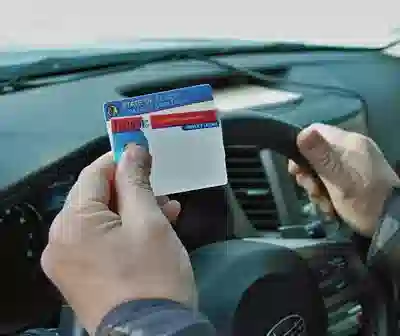
- Must have Minnesota carry permit card & ID in possession when carrying. And must show them upon lawful demand by police. Violation is a petty misdemeanor, $25 fine.
- Failure to have Minnesota carry permit card & ID in possession does not void permit.
- Dismiss citation for violating paragraph (a) (failure to show carry permit and ID), if person later shows had carry permit.
- Upon request of a peace officer, permit holder shall disclose whether carrying a firearm.
A Minnesota police officer can check to see if a person has a valid permit to carry a firearm without seeing the physical card by through their squad car computer access to state databases. However, that would take more time than seeing the card. While carry permit information may not always be immediately linked to a driver’s license check, officers can access these records. But since the statute requires permit holders to show the card and ID on request, making it a petty misdemeanor violation to fail to do so, it’s a good idea to carry the card and ID when carrying a firearm in public.
Traffic stop with Minnesota carry permit
Ten Best practices (more than what is required by law) at police contacts:
- Avoid doing or saying anything that could make anyone less safe.
- Never volunteer whether carrying a firearm, unless asked.
- Actions can be seen; good intentions cannot. So adopt a neutral attitude. Avoid being eager to please. Breathe deeply. Relax. Don’t take the initiative. If this were a dance, you’d be following the officer’s lead.
- If asked, hand police officer carry permit under driver’s license (or after giving driver’s license earlier), if carrying.
- Never, ever, say the word “gun,” or similar words. (That thing which must not be mentioned.)
- Police officer may ask if armed. Let them know the location (don’t say gun), then wait instruction. (Hands visible. Avoid reaching. Expect officer to take it.)
- We want the officer to feel safe & in control. We don’t do anything until asked.
- Police officer may take temporary possession for safety. And may request you exit vehicle; hands open and up; with officer retrieving firearm.
- The officer should return it at conclusion, in “safe” condition.
- Be polite.
FAQ: “Can Police Lawfully Take My Weapon During a Terry Stop?”
If we have a client facing criminal charges, and we are looking at past events, we can analyze the facts of what already happened to see if the Fourth Amendment seizure was initially lawfully, whether seizure of a weapon was lawful, and whether the Fourth Amendment seizure became unlawful at some point. That is a retrospective analysis.
But in real time, as events are unfolding, police officers in Minnesota conducting a lawful Terry stop who become aware of a firearm in possession of the person stopped, can lawfully take temporary possession of that firearm for safety.
In the Terry case, the Court upheld a frisk and the officer’s decision to “reach … for and remove … the [suspects’] guns” without regard to the possibility that the suspects could have been legally armed. Terry v. Ohio, 392 U.S. 1 (US Supreme Court 1968). See United States v. Rodriguez, 739 F.3d 481 (10th Cir. 2013) (police officer was entitled to seize a citizen’s gun during a Terry stop even though New Mexico law allows carry with a permit and some other circumstances; the officer did not need to wait to find out whether the suspect’s possession was lawful).
If a person “consents” to a search, the government may no longer need to otherwise justify the search. As a result, we should be aware of the difference between police officer’s legal authority to temporarily seize a weapon during a Terry stop, and volunteering or “consenting” to a stop or search.
In other words, we need not volunteer information if it’s not legally required (i.e., show permit card and ID upon request). And we need not “consent” to a search. But we can comply with a police officer’s directives without volunteering unnecessary information or verbally consenting to a search. For more on Terry stops and searches, see:
Expansion of the Stop | Prolonged, Intrusive
Police Investigation
Illegal Search | Fourth Amendment
Other states: reciprocity vs federal
- Minnesota Statutes § 624.714, Subd. 16
- Minnesota Bureau of Criminal Apprehension web-page lists carry permits from other states valid in Minnesota.
- Out-of-state person can get a Minnesota carry permit. And, Minnesota residents can get other-state carry permits, some with broader reciprocity than Minnesota’s.
- A federal law authorizes most police officers to carry without permit in any state in most locations. 18 U.S.C. §§ 926B and 926C.
Permit to Purchase
A carry permit allows you to lawfully purchase a firearm:
“A valid permit to carry issued pursuant to section 624.714 constitutes a transferee permit …”
Minnesota Statutes § 624.7131, Subd. 9 (2025)
But if you don’t have one, you can apply for a purchase permit under Minnesota Statutes § 624.7131. And a Permit to Purchase is:
- Required to purchase handgun or “military-style rifle” from dealer (FFL)
- Valid for one year (vs five years for carry permit)
- Prosecutors can charge a false statement on a permit application as a crime
- No need for a Purchase permit, for holders of a Minnesota Carry Permit
- Denial – prohibited person only – appeal
Alcohol & Your Minnesota Carry Permit
“Carrying Under Influence of Alcohol,” Minn. Stat. § 624.7142: When in public carrying, the bright-line, legal limit for alcohol concentration is 0.04. And even with a Minnesota carry permit, carrying with 0.04 or higher alcohol concentration is a misdemeanor crime. More in this article:
Carrying under the influence laws in Minnesota.
Best practices: This is another reason to avoid alcohol entirely when carrying; and avoid carrying when drinking. Gun safety is the most important reason, even more important than the law. And good habits are the foundation of safety. So even when “it doesn’t matter,” it actually does matter because you are reinforcing a habit, for good or ill.
Other Crimes: Minnesota carry permit
- Carrying Firearm Without Permit (where required)
- Criminal: gun crimes vs. enhancement & mandatory minimums for non-gun crime plus gun
- Civil: loss of civil rights vs. property rights. Time period of loss
- Sell or give a gun to an ineligible person. Minn. Stat. § 624.7141, including straw-purchaser
- Negligent Storage (access by minor)
- Ineligible person in possession a/k/a Prohibited Person in Possession
- False statement on purchase ATF Form 4473 (misunderstood legal terms)
- Carrying BB Gun Without Permit (where required)
- Reckless Discharge of a Firearm Within a Municipality
- Intentional Discharge of a Firearm Under Circumstances that Endanger
- Brandishing Felony Assault 2, Intent & Self-defense
Defenses
In addition to criminal defenses available in every case, we have several defenses more common to criminal charges involving guns, including:
- self-defense, defense of another
- accident (simple negligence)
- mistake
- notice
- estoppel
- due care
- jury nullification
Carry-related pages
Minnesota Self-defense laws
My series of articles on Minnesota self-defense laws
Avoiding Trouble: Practical Tips
I see the problems that commonly arise, that other folks don’t have an opportunity to see. Here are some practical tips for avoiding trouble:
- Avoid off-body carry when possible (briefcase, bag, purse). Less likely to forget a firearm in a bag at a security screen, a public restroom, or unsecure location in home with kids under 18.
- If children under 18 are in the home, secure firearm in a locked location such as a gun safe, at all times when off-body.
- Never consume alcohol and touch a firearm on the same day. Almost all negligent discharge cases happen when handling a weapon after drinking.
- Be extra careful with a firearm in a motor vehicle, especially if no valid carry permit. Learn the law about carry and transport.
- Get up to speed on Minnesota self-defense law, and what to avoid, and do, if attacked. Train.
- Redundant layers upon layers of defense are ideal, both for practical and for legal self-defense.
FAQ: “Can I be charged with Carry Without Permit if it expired recently?”
Yes. Minnesota has no grace period. Your Minnesota carry permit is valid until it expires (five years), or until void prior to that. But once the permit expires or is made void for another reason, carrying a firearm in a public place can result in criminal charges. So, remember to submit a renewal application before expiration. Otherwise, stop public carry until valid again.
FAQ: “How can my Carry Permit be Void before it expires?”
The permit to carry is void at the time that the holder becomes prohibited by law from possessing a firearm. As a practical matter, the most common reason is certain criminal pending cases or convictions.
“Permit to carry voided.
(a) The permit to carry is void at the time that the holder becomes prohibited by law from possessing a firearm …
(b) When a permit holder is convicted of an offense that prohibits the permit holder from possessing a firearm …(c) The sheriff … may file a petition with the district court therein, for an order revoking a permit to carry on the grounds set forth in …”
Minn. Stat. § 624.714, Subd. 8 (2025)
For more on what makes a person “prohibited,” including which certain criminal pending cases or convictions, see:
What makes a person “prohibited” from firearms?
Carry Attorney Thomas Gallagher
Why should you be sure your criminal defense lawyer knows the gun laws? Because a felony and select misdemeanors can diminish or destroy your civil rights to firearms. The courts call that a “collateral consequence.” But your human rights are important. And Carry Attorney Thomas Gallagher understands the risks for your civil rights and how to protect them.
Next, some crimes relate specifically to guns. So “firearm crimes” specifically relate to firearms, like carrying in a public place at over 0.04, for example. But other non-gun crimes have mandatory minimum sentences if a gun was nearby. But either way, you’ll want a criminal defense attorney who knows how to field-strip a firearm; who knows and cares. And carry Attorney Thomas Gallagher is a best-rated criminal defense lawyer.
Attorney Thomas Gallagher is also a recognized expert on gun laws; and has taught many CLE classes to lawyers on gun laws, including courses on Minnesota Gun Law.
More: Minnesota carry permit
What is firearm possession?
Discharge of Firearm | Reckless vs Intentional
Gallagher wins No Serial Number Firearm case
Do I Need a Criminal Defense Lawyer?
Minnesota Crimes & Criminal Laws