
Key Takeaways
- Minnesota Supreme Court strikes down prosecutor abuse of Minn Stat § 609.667.
- Possession of a non-NFA PMF without serial number is legal under Minnesota and federal law.
- Few firearms fit the NFA ‘firearm’ definition so Minn Stat § 609.667(3) is inapplicable to most PMFs.
- Historically firearms did not have serial numbers so Second Amendment applies.
Update
In the 2025 case of State v. Vagle, the Minnesota Supreme Court strikes down prosecutor misapplication of Minn. Stat. § 609.667 (3) to firearms not required to have serial numbers. Its analysis is similar to the original article below on privately made firearms (PMF) without a serial number (“ghost gun”) cases.
Unfortunately, some prosecutors neglected to “read the statute” that criminalizes possession of an NFA firearm without a serial number. But Attorney Thomas Gallagher has obtained dismissals of these felony charges for clients. The charges were dismissed, based on reading the statute. The clients possessed a Privately Made Firearm without a serial number but not a “NFA gun,” just an ordinary handgun. (Nor a “ghost gun” invisible to a metal detector.)
Few guns are NFA “Firearms”
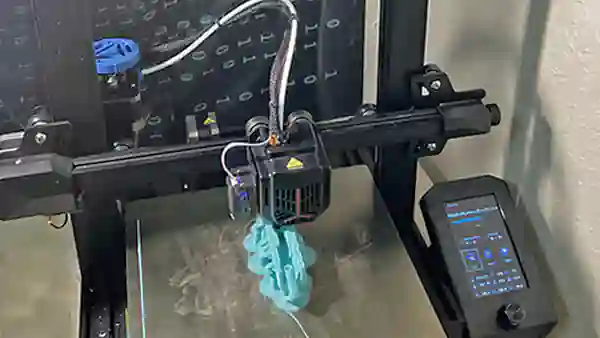
Is it legal to possess a gun with no serial number in Minnesota? Our focus here will be on homemade firearms under Minnesota law. But we’ll touch on a few other privately made firearm topics.
Historically most guns never had serial numbers. And today large numbers of guns in common use and possession have no serial number. Serial numbers were not required when the Second Amendment was adopted in 1791, and were not widely used by commercial manufacturers and importers until 1968. And when it comes to “privately made firearms” federal law does not require a serial number, unless an NFA “firearm” (e.g. short-barreled shotgun, etc.)
“Do as I say, not as I do:” And even now, government agencies of the State of Minnesota sell firearms without serial numbers, on a regular basis.
So it is not a Minnesota crime to possess a firearm without a serial number, as a general matter. Because a Minnesota Statute makes possession of a “NFA gun without a serial number” a crime. And “NFA guns” are a rarity. So they are an exception to the general rule.
Minnesota Statute § 609.667 vs privately made firearm
Beginning in 2022, some prosecutors began falsely charging people with a felony crime under Minn. Stat. § 609.667 Felony Possess Firearm Without Serial Number, “‘serial number or other identification’ means the serial number and other information required under United States Code, title 26, section 5842, for the identification of firearms:”
“Whoever commits any of the following acts may be sentenced to imprisonment for not more than five years or to payment of a fine of not more than $10,000, or both:
Minn. Stat. § 609.667
(1) obliterates, removes, changes, or alters the serial number or other identification of a firearm;
(2) receives or possesses a firearm, the serial number or other identification of which has been obliterated, removed, changed, or altered; or
(3) receives or possesses a firearm that is not identified by a serial number.
As used in this section,”serial number or other identification” means the serial number and other information required under United States Code, title 26, section 5842, for the identification of firearms.”
The first two subsections of the statute aim at stolen firearms. An obliterated serial number could be evidence of stolen property.
But the third subsection is confusing on the surface, including to some trained lawyers working as prosecutors in Minnesota. At first glance, subsection 3 appears to make possession of a gun without a serial number a crime. But, constitutional principles of due process and basic fairness require that a criminal law must provide fair notice. And a plain reading of the statute yields the correct answer, in “black letter law.”
This law is incomprehensible to most non-lawyer readers too, and fails the “due process” test; making it appear unconstitutional on due process grounds, for vagueness.
But let’s move past that for now, and chase down the legal breadcrumbs embedded in the statute.
Federal Definition Incorporated: NFA “Firearms”
The statute says “a firearm that is not identified by a serial number.”
Then it goes on to say “As used in this section, ‘serial number or other identification’ means the serial number and other information required under United States Code, title 26, section 5842, for the identification of firearms.” And when we then look at 26 United States Code 5842 it says:
“(a) Identification of firearms other than destructive devices
26 U.S. Code 5842 (a)
Each manufacturer and importer and anyone making a firearm shall identify each firearm, other than a destructive device, manufactured, imported, or made by a serial number.”
But the term “firearm” as used in Title 26 of the United States Code has a specific statutory definition, “For the purpose of this chapter [the NFA]” . This is because the statute says that it does.
26 U.S. Code § 5845 – Definitions
26 U.S. Code § 5845 (a), (e)
For the purpose of this chapter [Title 26] —
(a) Firearm
“The term “firearm” means (1) a shotgun having a barrel or barrels of less than 18 inches in length; (2) a weapon made from a shotgun if such weapon as modified has an overall length of less than 26 inches or a barrel or barrels of less than 18 inches in length; (3) a rifle having a barrel or barrels of less than 16 inches in length; (4) a weapon made from a rifle if such weapon as modified has an overall length of less than 26 inches or a barrel or barrels of less than 16 inches in length; (5) any other weapon, as defined in subsection (e); (6) a machinegun; (7) any silencer (as defined in section 921 of title 18, United States Code); and (8) a destructive device [e.g., explosives.] …
The definition of “firearm” in the National Firearms Act (NFA), Title 26 of the United States Code, describes what we commonly call NFA weapons. These are firearms registered under the National Firearms Act of 1934; such as machine guns, short barreled rifles, etc.
This is the definition that Minnesota Statutes §609.667 incorporates. So, the only “firearms” that statute attempts to criminalize are NFA firearms (not any privately made firearm or “ghost gun”). Therefore, almost everyone facing this charge should ask a judge to dismiss (unless an NFA firearm.)
Second Amendment protection: privately made firearm
Does the Second Amendment of the United States Constitution provide legal protection from criminal prosecution relating to firearm serial numbers? At this point we should note distinct types of serial number cases protected:
- obliterate, remove or alter serial number or other identification of a firearm
- no serial number ever on firearm
The Second Amendment to the United States Constitution states:
“A well regulated Militia, being necessary to the security of a free State, the right of the people to keep and bear Arms, shall not be infringed.”
United States Constitution, Second Amendment
We believe that that the plain text of the Second Amendment protects the conduct prohibited by Minn. Stat. § 609.667, and that conduct was unregulated in 1791. And we believe that under the U.S. Supreme Court’s holding in New York State Rifle & Pistol Assn v. Bruen, 597 U.S. 1 (US Supreme Court 2022), this statute is facially unconstitutional.
But the Minnesota Court of Appeals has held to the contrary, in State v. Jones, 25 NW3d 732 (Minn Court of Appeals 2025). It held that Minnesota Statutes § 609.667(3) (2022), prohibiting possession of a firearm that never had a serial number, does not violate the Second Amendment to the United States Constitution as applied to appellant’s possession of a privately made firearm without a serial number. The court claims a historical analogue in “George Washington’s requirement that his army’s firearms be marked.”
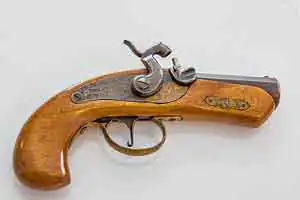
This is a false analogy. George Washington’s army, the Continental Army, marked all its property generally (not particularly firearms), for example with “USA,” to indicate “property of USA.” Why? Soldiers in George Washington’s Continental Army frequently used their own private weapons. Many brought hunting rifles or shotguns from home. And Washington encouraged this, offering to pay for the use of private arms. Washington’s army regulars and the militiamen that joined them, all carried firearm without serial numbers. No one called them “ghost guns.” The United States is built on privately made firearms without serial numbers.
George Washington’s Continental Army marking all types of property became more common after the signing of the Declaration of Independence. The “USA” button was placed on uniforms across regiments and service branches of the Continental Army. These brass or block tin buttons identified soldiers as regulars rather than militia. Some musket components were also marked with “U STATES” brands, along with “U S” lock and barrel stamps, to indicate continental ownership. And this marking practice signified partisan affiliation and helped prevent the theft of government supplies like clothing.
This practice did not relate to firearms; but rather to property in general. And those markings were generic to all items in a category, not unique identifiers of each item (were not serial numbers). The Roman army, from 100 BC to 500 AD, marked its property (not just arms) to assist in managing it. As a result, using this as a historical analogue to restrictions on firearm possession is a false analogy.
Through history, various types of property have been marked for different purposes, including establishing ownership, defining boundaries, preventing theft. Therefore, to specifically discuss the marking of weapons specifically, without acknowledging the broader historical context of property marking would be a misleadingly incomplete representation of the practice.
In fact, the earliest form of written language in Europe was in Mycenae (Greece) in the 14th-13th centuries BC, in Linear B script on clay tablets. Linear B was used for administrative and economic records to keep track of property (inventory), including weapons, in the Mycenaean civilization.
But to describe written language as a method of marking weapons would be disingenuous. Using writing to mark weapons is a specific application of language, not the defining characteristic of what written language is. Equating the two would be a misleading and insincere representation of the true nature of written language.
For now, the Minnesota Court of Appeals holding in Jones, creates precedential caselaw on the issue, unless appealed to the Minnesota Supreme Court. Ultimately, however, the U.S. Supreme Court will settle this issue.
In the meantime, defendants facing this charge in Minnesota can continue to raise the Second Amendment as a defense, in part to preserve the issue for appeal. And of course now that the statutory issue has been resolved in the Minnesota Supreme Court’s Vagle case, we will not need to make a Second Amendment argument. See, State v. Vagle, 24 NW3d 481 (Minn Supreme Court 2025).
Historical analysis: Serial Numbers on Guns
Laws did not require serial numbers for firearms manufactured and imported until the Gun Control Act of 1968. But even in 1968 the law did not prohibit mere possession of a firearm with an altered serial number. Then in 1990, the Congress amended 18 USC § 922 , in the 1990 Crime Control Act, to insert:
“or to possess or receive any firearm which has had the importer’s or manufacturer’s serial number removed, obliterated, or altered and has, at any time, been shipped or transported in interstate or foreign commerce.”
18 U.S.C. § 922
But no similar requirement existed in 1791. At that time, people did not require or commonly use serial numbers on guns, whether a privately made firearm or not.
The U.S. Supreme Court has yet to decide a conflict in the federal appellate circuit courts. Therefore, we don’t know for sure how the U.S. Supreme Court will decide this question. So, a defendant may wish to raise this issue in defense. But a prudent person may wish to avoid the risk of prosecution, if it still exists.
Implications: privately made firearm
Minnesota Statute § 609.667 (3) makes it a crime to possess an NFA firearm (only) without a serial number. Of course, very few firearms are of the NFA type in Minnesota. So for the vast majority of all firearms in Minnesota, though legal, a person may wish reduce risk of wrongful criminal prosecution by placing a serial number on privately made firearms.
Prosecutions for unserialized Privately Made Firearms aren’t about public safety but are primarily a tool for selective prosecution, leverage in plea bargaining or a means of incarcerating otherwise law-abiding citizens when the government’s primary theory falls short. Firearm ownership is a ubiquitous feature of American life.
“Ain’t afraid of no ghost gun:” The polemic “ghost gun” lacks a basis in American history and culture. And the attention-seeking term, has been used to described forearms “undetectable” with metal detectors, e.g., the 1988 Undetectable Firearms Act.
Moreover, the term “ghost gun” is nowhere to be found in any statute or law. But “ghost gun” sensationalism aside, privately made firearms are a proud tradition of our people and our nation since before its founding, and ever since.
Additional Defenses: serial number cases
Other defenses can mean the accused is not-guilty. For example, a person is not-guilty of a crime requiring knowing possession of a gun, without evidence proving knowledge.
And since the ATF has always said that privately made firearms are not required to have a serial number under federal law (unless NFA firearms), the defense of reliance on a government statement is available.
The Second Amendment, the supreme law of the land, also provides a defense, discussed above.
State v Vagle, Minn. Court of Appeals
In State v. Vagle, 999 NW2d 909 (Minn Court of Appeals 2023), reversed 24 NW3d 481 (Minn Supreme Court 2025), the Minnesota Court of Appeals had reversed and remanded a trial court judge’s correct dismissal of a Minnesota Statute § 609.667 (3), Serial Number charge. The Court of Appeals opinion argued: “Vagle acknowledges that section 609.667 (3) clearly states that it is a crime to possess a firearm without a serial number.”
But section 609.667 (3) specifies that it is a crime to possess a NFA “firearm” without a serial number. It does not say it is a crime to possess a (non-NFA) firearm without a serial number. All that is required is a reading of the Minnesota Statute, and the federal statutes it incorporates by reference.
When interpreting a statute, a first step is to determine whether the language of the statute is ambiguous. But here, the Minnesota statute is clear. It incorporates by reference the federal statute’s serial number requirement. (“Serial number or other identification” means the serial number and other information required under United States Code, title 26, section 5842, for the identification of firearms.”)
And is that federal statute ambiguous? Not at all. Title 26 defines what is a “firearm” subject to Title 26, in a definitions section as is customary in statutes, at 26 U.S. Code § 5845 (a), (e) (quoted above.) And it explicitly excludes non-NFA firearms in that Title’s application. It has no ambiguity.
Notably, that definition is narrower that the common meaning of the word “firearm.” And when a statute’s definition of a term is unambiguous, as here, then court use that meaning rather than the common meaning. See, State v. Peck, 773 NW2d 768 (Minn Supreme Court 2009) (trace levels methamphetamine in water was “mixture” justifying prison based on weight of the water).
Since the federal law requires a serial number only on NFA “firearms,” so does the Minnesota statute. Therefore the statutes under their statutory definitions, do not apply to a privately made firearm, unless the unlikely event it is an NFA “firearm.”
Due process is a constitutional right. And it requires that the government must give people fair notice of just what conduct is criminally illegal. But here, the Minnesota statute incorporates the federal statute on NFA firearms, which explicitly excludes almost all firearms, from its statutory definition. And so, the statute put people on notice that NFA firearms must have a serial number, but non-NFA firearms need not (e.g., most pre-1968 firearms), “ghost gun” polemics aside.
The interpretation ignoring the federal statute’s definition of “firearm” as NFA firearms, therefore does not satisfy the fair notice requirement inherent to the concept of due process.
Further, criminal charges for possession of a non-NFA gun without a serial number violate the long-established rule that a government may not officially inform an individual that certain conduct is permitted and then prosecute the individual for engaging in that same conduct.
One red flag is the opinion repeating the ghost-gun pejorative polemic. Another red flag in the Court of Appeals decision is their citing of the State v. Salyers, 858 NW2d 156 (Minn. Supreme Court 2015), case as precedent. That case did not turn on Minnesota Statute § 609.667 (3), mentioning it in passing as dicta. Also, the weapon in the Salyers case actually was an NFA “firearm” (short-barreled shotgun). So applying that case, and this statute, to a non-NFA gun is a glaring, fundamental error.
Bondi v. VanDerstock, US Supreme Court 2025
ATF administrative rule interpreting the Gun Control Act of 1968: Before Vagle was decided, the U.S. Supreme Court, in Bondi v. Vanderstock held that an ATF administrative rule interpreting the Gun Control Act of 1968, 18 U.S.C. §§ 922, 923, to cover some products readily convertible into an operational firearm or a functional frame or receiver was not facially inconsistent with the Gun Control Act of 1968.
Not a Second Amendment challenge: First, note that it was not a Second Amendment challenge to a criminal statute making possession of a gun without serial number a crime.
Administrative law issue: Rather, Vanderstock was about an issue of administrative law – whether an administrative rule violated a statute (not the Constitution).
However, in Defense Distributed v. Blanche, No. 4:22-cv-00691-O (N.D. Tex. Aug. 17, 2026), a federal District Court granted summary judgment to the plaintiffs, striking down the ATF’s frame or receiver rule as a violation of the Second Amendment (as distinguished from the administrative law issues in Bondi v. Vanderstock). The court held that the ATF’s 2022 Final Rule defining “frame or receiver” is void as a violation of the Second Amendment and is unconstitutionally void for vagueness under the Fifth Amendment’s Due Process Clause, issuing a declaratory judgment and injunction for specific unfinished receivers.
“Importers and manufacturers” vs privately made
But more to the point here, the decision’s discussion helps clarify that Minnesota Statute § 609.667 (3), as written, only requires serial numbers on NFA firearms, such as short barrelled rifles, etc. The following quotes help make this clear:
“The Act also requires importers and manufacturers to mark their firearms with serial numbers. §923(i). …”
“Next, consider how the GCA uses the words ‘frame’ and ‘receiver’ elsewhere. Section 923(i) spells out the Act’s serialization mandate. It requires those who make or sell ‘firearms’ to identify their products ‘by means of a serial number engraved or cast on the receiver or frame.’ Though this directive may seem simple enough, it is complicated by the fact that the statutory definition of “firearm” includes some incomplete ‘weapon[s],’ ‘muffler[s],’ ‘silencer[s],’ and ‘destructive device[s].’ §921(a)(3). Sometimes, those items lack a finished or prototypical firearm frame or receiver. Yet, all the same, §923(i) treats them as ‘firearms’ that must have a serial number engraved or cast on their ‘frame[s]’ or ‘receiver[s].’ …As we have stressed, a statute’s text and context are critical to determining whether (and to what extent) Congress used an artifact noun to reach unfinished objects. And, without doubt, the NFA and the GCA are different statutes passed at different times to address different problems using different language.”
Bondi v. VanDerStok, 604 U.S. 458, 483 (US Supreme Court 2025)
These quotes from the VanDerStok case, including “The Act [the NFA] also requires importers and manufacturers to mark their firearms with serial numbers” and “without doubt, the NFA and the GCA are different statutes passed at different times to address different problems using different language,” underscore the Minnesota Supreme Court’s analysis in the Vagle case.
Minnesota Incorporates the NFA, not the GCA
The Minnesota court made clear that Minnesota Statutes § 609.667 (3) does not by it’s language, criminally prohibit possession of a firearm that was privately made without a serial number, since it incorporates the NFA serialization statute, 26 United States Code 5842, not the GCA serialization statute, 18 U.S.C. §§ 922, 923. The Minnesota Supreme Court said as much and specifically cited the VanDerStok case in support of its decision in Vagle. And Justice Hudson’s dissent in Vagle, accurately points out that federal law does not require a serial number on a Privately Made Firearm:
“The Gun Control Act is applicable only to federal firearm licensees (FFLs), defined as persons ‘engage[d] in the business of importing, manufacturing, or dealing’ firearms or ammunition. 18 U.S.C. § 923(a). Non-FFL individuals who possess a privately made firearm for personal use are not required to place a serial number on the firearm under the Gun Control Act. Definition of “Frame or Receiver” and Identification of Firearms, 87 Fed. Reg. 24,652, 24,652–53 (Apr. 26, 2022) (codified at 27 C.F.R. §§ 447, 478, 479).”
State v. Vagle, 24 NW3d 481 (Minn Supreme Court 2025), fn. 4, page D-5.
Here is the Federal Gun Control Act, 18 U.S.C. § 921, definition of firearm requiring serial number:
“(3) The term “firearm” means (A) any weapon (including a starter gun) which will or is designed to or may readily be converted to expel a projectile by the action of an explosive; (B) the frame or receiver of any such weapon; (C) any firearm muffler or firearm silencer; or (D) any destructive device.”
Federal Gun Control Act, 18 U.S.C. § 921 (applicable only to federal firearm licensees, FFLs, persons engaged in the business of importing, manufacturing, or dealing firearms or ammunition)
Compare that to the federal National Firearms Tax Act definition, 26 U.S. Code § 5845 (the definition of a firearm requiring a serial number incorporated into Minnesota Statutes § 609.667 (3):
“For the purpose of this chapter—
National Firearms Tax Act definition, 26 US Code § 5845 (definition of a firearm requiring serial number)
(a) Firearm
The term ‘firearm’ means (1) a shotgun having a barrel or barrels of less than 18 inches in length; (2) a weapon made from a shotgun if such weapon as modified has an overall length of less than 26 inches or a barrel or barrels of less than 18 inches in length; (3) a rifle having a barrel or barrels of less than 16 inches in length; (4) a weapon made from a rifle if such weapon as modified has an overall length of less than 26 inches or a barrel or barrels of less than 16 inches in length; (5) any other weapon, as defined in subsection (e); (6) a machinegun; (7) any silencer (as defined in section 921 of title 18, United States Code); and (8) a destructive device. The term “firearm” shall not include an antique firearm or any device (other than a machinegun or destructive device) which, although designed as a weapon, the Secretary finds by reason of the date of its manufacture, value, design, and other characteristics is primarily a collector’s item and is not likely to be used as a weapon.”
In other words, NFA “firearms” are a specific category of regulated firearms under the National Firearms Act of 1934 (NFA). These include machine guns, short-barreled rifles and shotguns, silencers, and destructive devices. They require special registration with the Bureau of Alcohol, Tobacco, Firearms and Explosives (ATF) and the payment for a tax stamp for acquisition or transfer. The National Firearms Act (NFA) requires serial numbers on all NFA ‘firearms,’ those that are fully-automatic (machineguns), rifles and shotguns with short barrels or overall lengths, and firearm sound suppressors, must be identified by a serial number, per 26 USC § 5842.
ATF: PMFs without serial numbers are federally legal
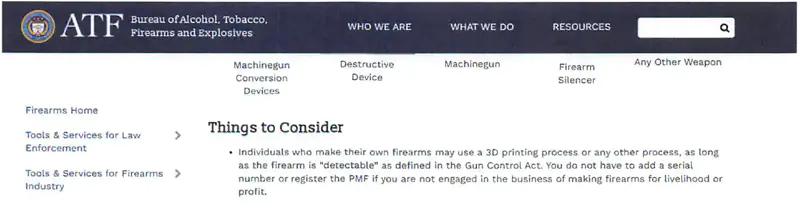
Not a ghost gun: According to the ATF “not all Privately Made Firearms (PMFs) are illegal and not all firearms are required to have a serial number… You do not have to add a serial number or register the PMF if you are not engaged in the business of making firearms for livelihood or profit:”
“Privately made firearms (PMFs) are firearms (including a frame or receiver) that have been completed, assembled or otherwise produced by a person other than a licensed manufacturer. PMFs are also made without a serial number placed by a licensed manufacturer at the time the firearm was produced. However, not all PMFs are illegal and not all firearms are required to have a serial number. …
Individuals who make their own firearms may use a 3D printing process or any other process, as long as the firearm is ‘detectable’ as defined in the Gun Control Act. You do not have to add a serial number or register the PMF if you are not engaged in the business of making firearms for livelihood or profit.”
Source: Bureau of Alcohol, Tobacco, Firearms and Explosives (ATF) Privately Made Firearms webpage. And as a result, the defense of reliance on an official government statement is available:
Reliance on a Government Statement.
Post-Vagle Minnesota Cases
In an appeal from the conviction for second-degree unintentional murder and possessing a firearm without a serial number stemming from events in 2023, The Minnesota Court of Appeals reversed the conviction for possession of a firearm without a serial number. The state had agreed with the defendant on appeal that his conviction for possession of a firearm without a serial number (“ghost gun”) must be reversed in light of State v. Vagle, 24 NW3d 481 (Minn Supreme Court 2025). And in its opinion reversing the conviction the court said:
“In Vagle, appellant was charged and convicted under Minnesota Statutes section 609.667(3) (2024), which criminalizes the receipt or possession of ‘a firearm that is not identified by a serial number.’ Id. at 484. Under the statute, ‘serial number’ means ‘the serial number and other information required under United States Code, title 26, section 5842, for the identification of firearms.’ Minn. Stat. § 609.667(3); Vagle, 24 N.W.3d at 484. The supreme court held that the statute criminalizes the possession of a firearm not identified by a serial number ‘only if federal law requires that the firearm have a serial number.’ Vagle, 24 N.W.3d at 494. The supreme court determined that federal law did not require Vagle’s gun—a gun that he assembled from parts purchased online—to have a serial number. Id. at 482-83, 494.
State v. Hassan, nonprec. A25-0360 (Minn Court of Appeals Mar 16, 2026)
Here, Hassan assembled his gun from parts he purchased online. He also conceded during testimony that his gun had no serial number. On this record, there is no evidence that the specific gun possessed by Hassan was one that federal law required to have a serial number. As such, Hassan’s conviction for this crime must be vacated.”
Question? Call Winona Attorney Tom Gallagher, 612 333-1500
Do you have a question about Minnesota criminal laws relating to firearms? You are welcome to call Winona Defense Attorney Thomas Gallagher for answers.
More: privately made firearm (not ghost gun)
What is “Possession” of a Firearm?
Gun Crime Charges Defense
Dangerous Weapon Charges & Defenses