
Estimated reading time: 6 minutes
Key Takeaways
- Current drug laws create more harm than they prevent, increase drug abuse and violent crime.
- Legalization reduces drug usage rates, as shown by historical alcohol and marijuana data.
- Rather than fund prisons, we should allocate resources to treatment and public health.
- Criminal enforcement drives up prices, increasing supply leading to higher demand for drugs.
- Attorney Thomas Gallagher advocates drug legalization as practical harm reduction.
How Possession became a crime
Why consider legalization? After all, until the 20th Century, possession of drugs was not a crime. So no one ever needed a Drug Defense Attorney. And common law crimes were things like murder, assault, rape, theft.
Why did they criminalize people for some drugs; but not others? The difference cannot be potential harm to the user, can it? After all, drink too much alcohol and you die from overdose. And alcohol is legal. But no human ever fatally overdosed from marijuana. The truth is, marijuana is safer.
What about drug abuse? The very term “drug abuse” acknowledges that no all drug use is “abuse.” But if a person is chemically dependent, existing civil commitment laws can force the person to get medical help involuntarily. See, Minnesota Statutes Chapter 253B. Legalization doesn’t change that. And history shows that criminal Prohibition laws, increase the prevalence of drug abuse, not decrease it.
Power, priorities, and the blame game: Today, many who volunteer for chemical dependency treatment help cannot get it. And that’s because funding is lacking. (For example, when someone seeks funding for inpatient treatment again, within two years of a previous admission.)
Why then, we may ask, do we fully fund prisons – brimming with non-violent, “drug offenders?” And why are we spending billions on criminal prosecutions? Why spend on that, rather than drug treatment and mental health treatment?
Prohibition laws cause more harm than drugs cause
The experiments in Prohibition – first with alcohol, then with marijuana – failed. Prohibition laws failed utterly and completely, over and over. And though the Prohibitionists’ stated goal was to reduce the usage of those drugs; the opposite happened, usage skyrocketed.
Prohibition laws have resulted in higher usage rates, during criminal Prohibitions. And this is true for both alcohol and marijuana; both in the United States and other countries.
Demand has exponentially increased since the beginning of the criminal Prohibition. And who meets that demand? The underground, illegal economy supplies that demand. Moreover, immense amounts of money flow through it. Only legalization destroys the criminal underground economy by creating a cheaper, safer alternative supply.
“Prohibition is the trigger of crime.”
Ian Fleming, Goldfinger
Security: Prohibition laws trigger violent crime
Who provides the security for all that money, in the underground, illegal economy? Not the police. Self-help security strategies protect that money. Street crime gangs are that underground market security.
So, most violent crime is the result of the drug laws. And Prohibition triggers the criminal use of guns. However, when we remove the laws criminalizing drugs; the violent crime rate drops as a result.
Legalization reduces violent crime: So why not change the laws? The laws could instead focus on Public Health, harm reduction for abusers. The laws could instead the destroy the underground economy and associated violent crime. And then we would not need drug prosecutors; nor a drug defense attorney.
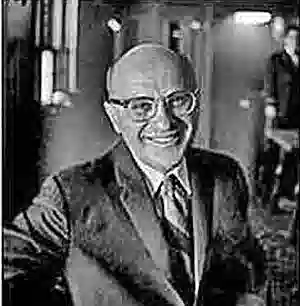
“The prohibition of drugs produces on the average 10,000 additional homicides a year. It’s a moral problem that the government is going around killing 10,000 people. It’s a moral problem that the government is making into criminals people who may be doing something you and I don’t approve of but who are doing something that hurts nobody else. Most of the arrests for drugs are for possession by casual users. Now, here’s somebody who wants to smoke a cigarette, a marijuana joint. If he’s caught, he goes to jail. Now, is that moral? Is that proper? I think it’s absolutely disgraceful that our government’s—supposed to be our government—should be in the position of converting people who are not harming others into criminals, of destroying their lives, putting them in jail. I don’t— that’s the issue to me. …
… See, if you look at the drug war from a purely economic point of view, the role of the government is to protect the drug cartel. That’s literally true.”
Milton Friedman, Conservative Economist
Priorities: send a message vs. reduce social harms?
Send a message: But some say, “O.k., criminal drug laws may not reduce drug abuse; but at least they send a message. We’ve got to do something!” That is an expression of frustration from wanting a solution, but being unquestionably committed to the wrong solution.
To the “send a message” sentiment, we ask “Why choose empty symbolism; when we could instead effectively end the violence, and reduce drug abuse?” Decriminalizing illegal drugs reduces the rate of use, and abuse.
Why less usage, where legal? Here, at different times: Look at the alcohol Prohibition in the U.S. – lower usage before, higher during and lower after. In science, we call this an A-B-A experimental format.
Now, in different countries: Compare the marijuana prohibition in the United States vs. Holland (The Netherlands). Or Portugal.
The evidence is consistent and clear. When the substance (alcohol, marijuana) is “legal,” per capita usage rates are lower. Legalization can reduce drug usage rates. So what explains this?
Law of supply & demand: natural law
The reason is economics – the law of supply and demand. Because natural law is stronger than man’s law.
As criminal enforcement increases while demand remains constant, first price increases. (Ironically, government officials have actually cited price increases as evidence of “winning the drug war!”)
Then as price increases in the unregulated, Underground Market; the incentive to produce supply also increases. For truly addictive drugs, such as heroin, the increase in supply can also then increase demand over time. But in the end, increased criminal law enforcement results in higher price. And higher price increases incentive to the suppliers. That leads to greater supply, and then more demand and higher usage rates. (The drug Cartels don’t care much about the loss of some of their workers to prison. They are replaced a minute later.)
And the cycle repeats. More enforcement leads to higher price. And higher price leads to larger supply. Then increased supply leads to more users (higher demand). And so on. So when we use criminal law to repress supply, in the end the usage rate becomes higher per capita. And that’s how Prohibition laws increased usage rates.
But repealing criminal Prohibition laws can reduce usage rates. Legalization reduces harms. Treating drug abuse as a medical problem works. And it eliminates the need for a drug defense attorney.
Harm reduction: solution that works, legalization
To reduce harms caused by abuse, drugs of potential abuse should be:
- decriminalized;
- either distributed like alcohol (e.g., marijuana); or like prescription drugs (e.g., addictive drugs like heroin, opiates);
- billions saved from criminal enforcement; fund chemical health education, treatment, reduce taxes.
“Marijuana never kicks down your door in the middle of the night. Marijuana never locks up sick and dying people, does not suppress medical research, does not peek in bedroom windows. Even if one takes every reefer madness allegation of the prohibitionists at face value, marijuana prohibition has done far more harm to far more people than marijuana ever could.”
William F. Buckley, Jr. (1925-2008), Author, founder ‘National Review’
Attorney Thomas Gallagher & legalization
The author, Thomas Gallagher is a criminal defense lawyer who defends people targeted in the government’s war on drug users. And he writes and speaks on legalization and drug policy reform.
Attorney Thomas Gallagher is a decades-long member of the NORML Legal Committee. His Gallagher Criminal Defense law office is in Winona, Minnesota.
More: legalization
Minnesota drug crimes defense
Removing Drugs from Minnesota “Crimes of Violence” Law
Public Order Crimes and Their Defense
Minnesota marijuana crimes defense
Marijuana Legalization in Minnesota: the Right Way