

Is religious use of marijuana, a defense to a marijuana criminal charge? The recent Minnesota Court of Appeals case of a Rastafarian indicates the answer may be “yes.” In the matter of the Welfare of J.J.M.A., A13-0295, the court addresses the issue.
The Minnesota Court of Appeals reversed a juvenile delinquency adjudication; based on his sincerely held religious belief as a Rastafarian. The court reversed the juvenile’s adjudication on a petty misdemeanor marijuana-paraphernalia charge, involving a pipe.
The fifteen year old boy was a practicing Rastafarian. And the Rastafari religion involves religious use of marijuana. It has for nearly 100 years.
Minnesota Constitution stronger than federal
The lower court found him guilty of the paraphernalia charge. But it also found:
“Rastafari is a true religion and that J.J.M.A. has a sincerely held belief in the tenets of that religion.”
In the matter of J.J.M.A., A13-0295 nonprec (Minn Court of Appeals 2013)
However, the lower court said, he “failed to satisfy his burden of showing that the Rastafari religion requires him to carry his pipe with him at all times.”
But the Minnesota Court of Appeals reversed that adjudication of guilt. And it did so citing Minnesota Constitution’s freedom-of-conscience clause, article 1, section 16:
“The right of every man to worship God according to the dictates of his own conscience shall never be infringed . . . nor shall any control of or interference with the rights of conscience be permitted . . . ; but the liberty of conscience hereby secured shall not be so construed as to excuse acts of licentiousness or justify practices inconsistent with the peace or safety of the state.”
In the matter of J.J.M.A., A13-0295 nonprec (Minn Court of Appeals 2013)
And, Minnesota’s Constitution provides more protection for religious freedom than the United States Constitution. Moreover, there is no Rastafarian exception.
“’This language is of a distinctively stronger character than the federal counterpart’ because it ‘precludes even an infringement on or an interference with religious freedom.’”
State v. Hershberger, 462 NW2d 393, 397 (Minn. Supreme Court 1990) (Hershberger II)
Four prong analysis
The court analyzed the four prongs of the compelling state interest balancing test, whether:
- the individual holds a sincerely held belief;
- regulation burdens the exercise of religious beliefs;
- state’s interest is overriding or compelling; and,
- regulation uses least restrictive means to accomplish state’s interest.
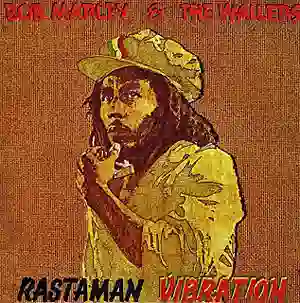
Rastafarian sincerely held religious belief
The court ruled that defense met its burden of showing a firmly held belief worthy of protection under section 16. The defendant had a firmly held belief in Rastafarian religion. And the court contrasted this case with past cases. In those past cases the defendants had failed to meet that burden; failing to connect conduct to a religious practice or principle.
The court said,
”once an individual has demonstrated a sincerely held religious belief intended to be protected by section 16, the burden shifts to the state ‘to demonstrate that public safety cannot be achieved by proposed alternative means.’”
In the matter of J.J.M.A., A13-0295 nonprec (Minn Court of Appeals 2013)
And the court held that the state failed to meet that burden in this case.
But though the case did not address application of the defense to a marijuana possession case; it may be helpful in such a case. So this case helps a Rastafarian defendant.
And given the fact that marijuana is safer than alcohol; the state should not meet its burden of proving restrictions on religious freedom by criminalizing marijuana improves public safety.
So a Rastafarian may have a religious use defense to a criminal marijuana charge.
Thomas Gallagher is a marijuana lawyer in Minnesota.
More: Rastafarian religious use
Minnesota Constitutional Defenses
The Trial of Jesus: A Criminal Law Perspective
Jesus as Defense Lawyer: The Woman Accused of Adultery
Minnesota Marijuana Laws
Unlawful Arrest and Illegal Evidence
Why Minnesota Marijuana Decrim Law Is Broken
Reliance on a Government Statement